
How to Read Horse Racing Odds: A Comprehensive Guide to Understanding Betting Margins, Value Betting, and Maximizing Your Winnings
Estimated reading time: 10 minutes
Key Takeaways
- Understanding horse racing odds is essential for making informed bets.
- There are three main types of odds formats: Fractional, Decimal, and Moneyline.
- Bookmakers set odds based on multiple factors, including horse performance and betting patterns.
- Knowing the difference between fixed odds and starting price can affect your potential returns.
- Applying strategies like value betting and understanding betting margins can help maximize winnings.
Table of Contents
- How to Read Horse Racing Odds: A Comprehensive Guide to Understanding Betting Margins, Value Betting, and Maximizing Your Winnings
- Understanding Horse Racing Odds
- Fractional Odds
- Decimal Odds
- Moneyline Odds
- How Bookmakers Set Odds
- Fixed Odds vs Starting Price
- Horse Racing Betting Margins
- What is Value Betting in Horse Racing
- Best Odds Guaranteed Explained
- Strategies to Identify Value in Horse Racing Bets
- Conclusion
- Additional Resources
- Frequently Asked Questions
Understanding Horse Racing Odds
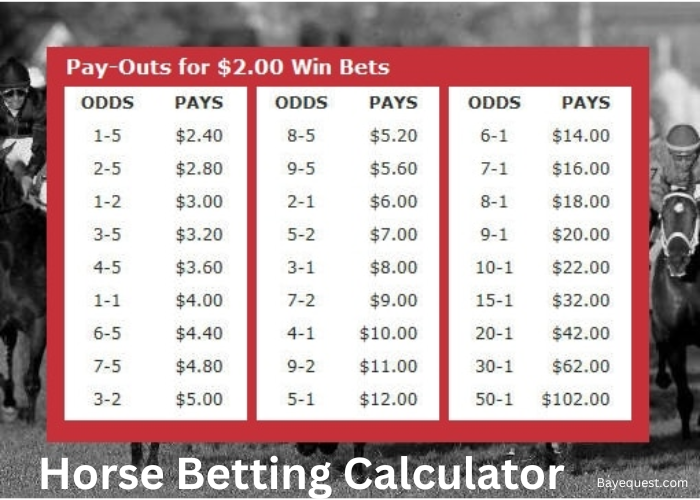
At their core, horse racing odds represent two crucial pieces of information: the probability of a horse winning and the potential payout if your bet succeeds. Let’s break down the three main types of odds formats you’ll encounter:
Fractional Odds
- Most common in UK and Ireland
- Written as 10/1 (ten-to-one) or 7/2 (seven-to-two)
- First number shows potential profit
- Second number indicates required stake
Example: With 10/1 odds, a £1 bet wins you £10 profit plus your original stake, totaling £11 return.
Decimal Odds
- Popular in Europe and Australia
- Shows total return including stake
- Multiply your stake by the decimal odds to calculate return
Example: Odds of 3.50 means a £1 bet returns £3.50 (£2.50 profit plus £1 stake)
Moneyline Odds
- Standard in United States
- Positive numbers (+600) show profit on $100 bet
- Negative numbers (-150) show stake needed to win $100
Example: +600 means $100 bet wins $600 profit; -150 means bet $150 to win $100
How Bookmakers Set Odds
Understanding how bookmakers determine odds helps you make better betting decisions. They consider multiple factors:
Key Influences:
- Horse’s past performance data
- Jockey and trainer statistics [Source]
- Track conditions and weather
- Current form and fitness
- Competition level
- Market betting patterns
Bookmakers continuously adjust odds based on:
- New information about horses or conditions
- Betting volume on each horse
- Overall market movements
- Need to balance their books
Fixed Odds vs Starting Price
When placing a bet, you’ll need to choose between fixed odds or starting price (SP). Each has distinct advantages:
Fixed Odds:
- Guaranteed odds when you place your bet
- Protection against odds shortening
- Certainty about potential returns
Starting Price:
- Final odds at race start
- Potential for better returns if odds drift up
- Risk of lower returns if odds shorten
Learn more about this from this guide.
Horse Racing Betting Margins
Betting margins represent the bookmaker’s built-in profit margin. Understanding them is crucial for finding value:
Calculating Margins:
- Add up implied probabilities of all outcomes
- Amount over 100% is the margin
- Lower margins mean better value for bettors
Example:
Three horses with probabilities:
- Horse A: 50%
- Horse B: 35%
- Horse C: 25%
Total: 110% (10% margin)
What is Value Betting in Horse Racing
Value betting is finding opportunities where the odds offered exceed the true probability of winning:
Value Betting Formula:
Value = (Odds × Probability) – 1
Example:
- Your assessed probability: 30% (implied odds 3.33)
- Bookmaker odds: 5.00
- Value = (5.00 × 0.30) – 1 = 0.50
- Positive value indicates a potentially profitable bet
Understanding this concept can greatly enhance your betting strategy. Reference: Horse Racing Terms and Jargon Buster
Best Odds Guaranteed Explained
Best Odds Guaranteed (BOG) offers protect you if odds improve after you bet:
How it Works:
- Place early fixed-odds bet
- If SP is higher, you get paid at SP
- If SP is lower, you keep original odds
Example:
Bet at fixed odds of 4/1
SP ends up at 5/1
You get paid at 5/1
Restrictions often include:
- Specific race types [More Info]
- Stake limits
- Timing requirements
Strategies to Identify Value in Horse Racing Bets
Successful betting requires a systematic approach:
Research Elements:
- Form analysis
- Track conditions
- Jockey-trainer combinations [Details]
- Class levels
- Weight carried
- Recent injuries or layoffs
Statistical Tools:
- Speed figures
- Performance ratings
- Track bias data
- Historical trends
Market Assessment:
- Compare odds across bookmakers
- Monitor odds movements
- Watch for significant market shifts
Risk Management:
- Set clear staking plans
- Maintain disciplined bankroll management
- Never chase losses
- Keep detailed betting records
Conclusion
Mastering how to read horse racing odds takes time and practice, but it’s essential for successful betting. Start by understanding basic odds formats, then progress to more advanced concepts like value betting and betting margins. Remember that successful betting is about finding value, not just picking winners.
Additional Resources
For further learning and odds comparison:
Frequently Asked Questions
Q: What are the most common types of horse racing odds?
A: The most common types are Fractional Odds, Decimal Odds, and Moneyline Odds. Each format presents the potential payout differently, so it’s important to understand all three.
Q: How do bookmakers make money from betting odds?
A: Bookmakers include a profit margin in the odds they offer, known as the betting margin. This ensures they make money regardless of the race outcome.
Q: What is value betting and how can it improve my returns?
A: Value betting involves finding bets where the odds offered are higher than the actual probability of winning. This strategy can lead to better long-term returns.
Q: Should I always choose fixed odds over starting price?
A: Not necessarily. Fixed odds provide certainty, but starting price can sometimes offer better returns if the odds drift in your favor before the race starts.
Q: What are Best Odds Guaranteed offers?
A: Best Odds Guaranteed (BOG) offers ensure that if the starting price is higher than the fixed odds you took, you’ll be paid out at the higher odds. It’s a way to maximize your potential returns.
